CONNECTORS & ELECTRONICS PACKAGING
Tooling for small parts
and reliable handling.
Connector plastics and electronics packaging depend on the details: pitch, retention, pocket fit, flatness and how a component is presented to an automated process.
This page covers custom tooling and development projects. It is not a catalog of standard packaging products or a claim that customer-owned tooling can be freely reused.
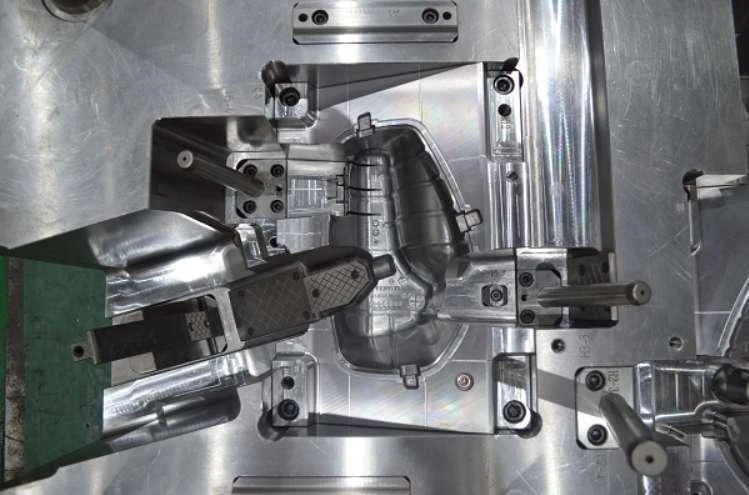
Define the tooling family
Connector plastic components and pick-up caps: component drawings, pitch, retention interfaces, vacuum pick-up area, material grade and handling conditions.
IC tray molds: package geometry, pocket arrangement, stack interfaces, flatness, temperature and ESD requirements. A requested tray format does not by itself establish verified compliance.
Carrier-tape forming tools: component fit, pocket dimensions, tape width and pitch, forming material and feeding orientation. This is forming-tool development, not the same tooling route as an injection-molded tray.
IC tube profiles: these require an extrusion tooling review. They must not be quoted as ordinary injection molds simply because they also package electronic components.
From geometry to a testable sample
We review the component, material and tooling route, agree the critical interfaces, and define a sample and inspection plan. Where machine compatibility matters, the customer and engineering team agree the equipment and acceptance method before tooling manufacture.
Bring the handling requirement
Component and packaging drawings; pitch or pocket dimensions; material grade; ESD and temperature targets; forming or molding equipment; trial quantity; expected repeat demand; inspection method; target delivery and country.
Existing tooling or a new design? Tell us which geometry is fixed, what may change and who owns the tooling. Reuse is evaluated only where the rights and application fit permit it.
ESD, thermal and dimensional performance must be validated for the selected grade and finished geometry. They are not inferred from the polymer family name alone.