ILLUSTRATIVE SOLUTION / NOT A COMPLETED INSTALLATION
From the mold
to an inspected tray.
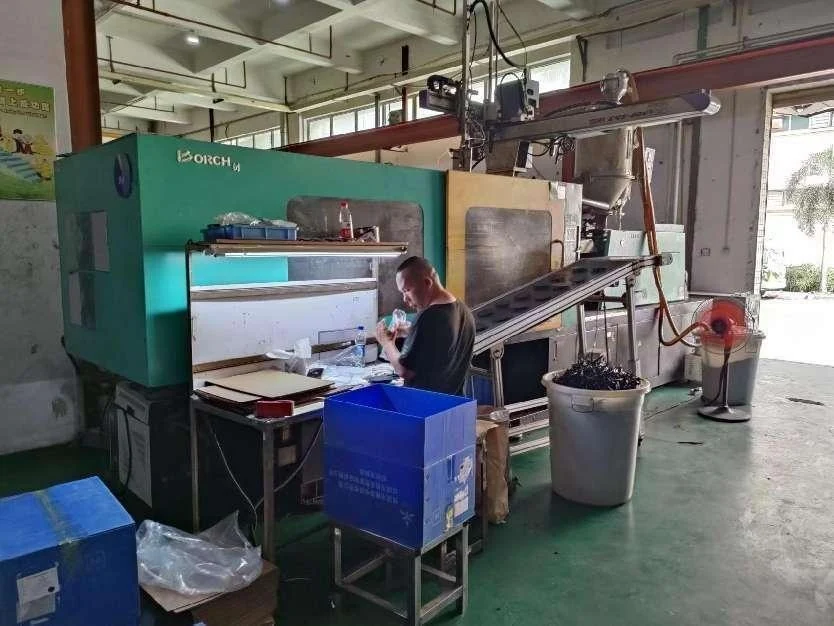
For small plastic housings, caps or precision molded components that need controlled handling after molding. This proposed workflow addresses manual transfers, mixed orientation and packing errors.
A procurement brief this could answer
“We can mold the part, but manual removal, inspection and tray loading are limiting output. Can you evaluate one cell that delivers correctly oriented parts in counted trays?”
Proposed process
Molding → Part take-out → Positioning → Agreed inspection → Pass/reject separation → Counting → Tray loading
Review gripper contact points, mold clearance, part temperature and allowable handling marks. Use a locating nest and inspection arrangement matched to accessible features. Define how rejected parts are separated and how a full tray is confirmed.
A gate-removal station, cavity identification, buffer or tray exchange can be evaluated when required. They are options to validate, not assumed features of every project.
What must be demonstrated
Part protection, reliable take-out, detection of agreed defects, reject separation, tray orientation and pack count. Test missing parts, full trays and stop/restart behavior, not only a short run with ideal parts.
Information for evaluation
Part and tray drawings, resin grade, cavity count, molding cycle, press interface, actual defects, current handling video, target output, available space and required traceability.
Practical first step: prove take-out and part protection using sample parts and a fixture before committing to inspection and automatic tray handling.
Proposed application built around the documented molding, inspection and packaging service scope. Throughput, detection performance and labor savings have not been measured for this scenario.