For a small silicone component, the drawing is only part of the requirement. The useful question is what the seal must do in its actual assembly and how that result will be verified.
Show the mating interface
Supply the surrounding parts, contact surfaces, assembly direction and relevant dimensional variation. Mark the sealing region and surfaces that must remain free of flash or gate marks. A nominal seal size without the mating geometry leaves important assumptions unresolved.
Name the material requirement
Provide the silicone grade, hardness, color and required documentation when known. When grade selection is open, describe temperature, fluid exposure, movement, assembly and the test objective. The material family name alone is not a complete specification for service performance.
For overmolding, include the substrate
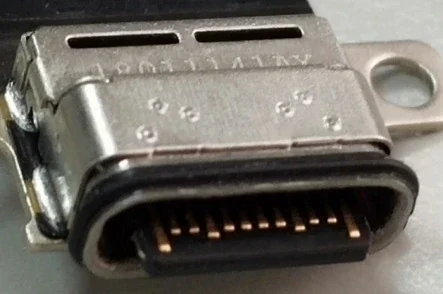
State the plastic or metal grade, filler, surface coating, supplied condition and incoming tolerances. Define whether the design needs bonding, mechanical retention, compression or another method of maintaining the interface. NewwaySmart’s Type-C archive combines LSR with reinforced nylon and plated metal components, but every new interface still needs its own review.
Decide what the first samples must prove
Separate dimensional acceptance from sealing, retention and appearance. Identify the test setup and acceptance conditions before the sample is made. A statement such as ‘waterproof’ should be translated into the actual test requirement; it should not be converted into an untested IP rating by a website or quotation.
Do not leave handling until the end
Describe how the component will be removed, inspected, packed and assembled. If automatic handling is planned, the allowed contact areas and presentation method belong in the development brief. A successful isolated molded sample does not by itself prove a complete automatic assembly process.
A useful first discussion can begin with a drawing, a failed sample or photographs explaining the sealing problem. Explore custom silicone seals, silicone insert overmolding and our Type-C project example.
Application basis: NewwaySmart’s documented LSR and multi-material service scope and Type-C project archive. Review questions are a project-preparation guide, not a universal seal-design standard.