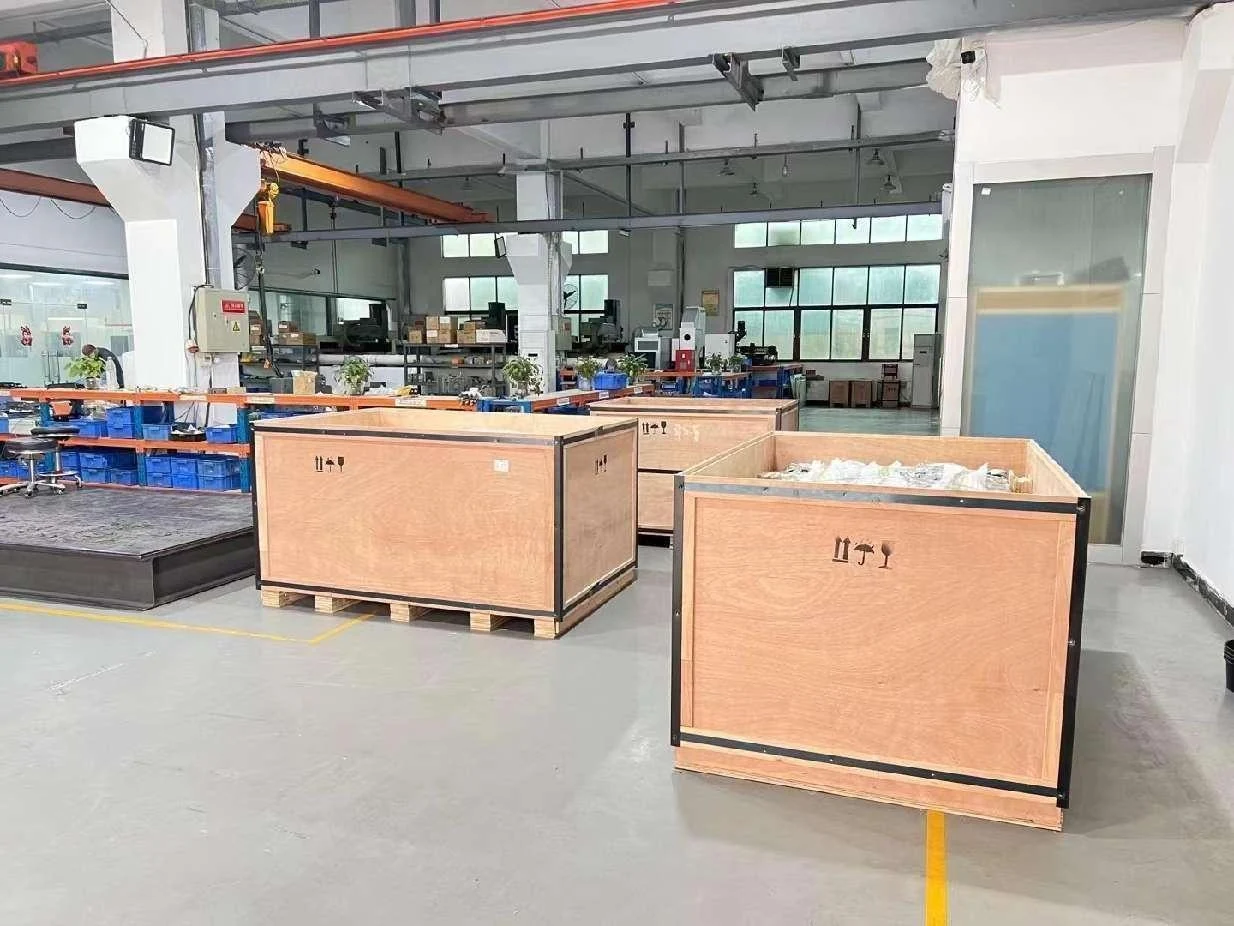
Export delivery is more than placing a mold in a wooden box. Protection, handling information and a usable handover package should be agreed alongside the tool specification.
Our recommended pre-packing review
Confirm the mold and drawing revision, accepted samples, unresolved items and release authorization. Photograph the condition and record the agreed cycle-counter reading. Verify that separately packed inserts, purchased components and spare parts match the packing list.
Prepare the tool according to its design and the equipment manufacturer’s instructions: clean and dry suitable surfaces, drain circuits as specified, apply compatible corrosion protection and protect ports and connectors. Preserve delicate polished surfaces without placing damaging contact materials against them. Document the removal of any inhibitor before production.
Secure the mass, protect the details
The crate or transport base should restrain the mold through suitable structural points, not through water fittings, cables or fragile components. Select cushioning, blocking and moisture protection for the weight, route and storage conditions. Mark gross/net weight, orientation, center of gravity where needed, approved lifting information and package identification. Lifting points and transport locks must follow the engineered arrangement.
Wood packaging: check the actual construction
ISPM 15 addresses raw-wood packaging used in international trade, including dunnage. Processed wood such as plywood is excluded from that standard’s scope. However, a plywood-sided crate may still contain solid-wood skids or bracing that require attention. Confirm the material, treatment and marking requirements for the complete packing arrangement and destination, not just the wall panels.
For shipments entering or transiting the United States, USDA APHIS requires regulated wood packaging to meet its published import conditions. An ordinary fumigation statement is not a universal substitute for compliant treatment and marking. Use an appropriately qualified packer and verify the shipment’s applicable requirements.
The handover package
| Identification | Tool number, product and drawing revisions, cavities, weight and shipment packing list. |
| Design and interfaces | Agreed 2D/3D files, BOM, target press interface, cooling circuit and electrical connection information. |
| Validation | Approved samples, agreed dimensional reports, trial settings, run-off summary and accepted open-item record. |
| Material and processing | Specified material certificates, hardness, heat-treatment or surface-treatment records where included in the order. |
| Wear parts and spares | Identified replacement inserts, pins, seals, heaters or other agreed items, with supplier part numbers where applicable. |
| Use and maintenance | Preservation removal, setup constraints, lubrication and inspection intervals, maintenance points and support contacts. |
Receiving and production transfer
Agree who receives the tool, inspects transport condition, installs it and signs the site acceptance. Record storage conditions and any delay before startup. Shipping readiness, delivery at the agreed place and acceptance of production are separate milestones. The purchase order should state included technical support and the process for requested changes or repairs.
Receiving-plant interfaces · Trial acceptance · Discuss mold delivery ↗
Official references checked October 2026: IPPC ISPM 15 scope; USDA APHIS wood-packaging import requirements. Packing details remain shipment-specific; this checklist is not a customs clearance or safety certification.