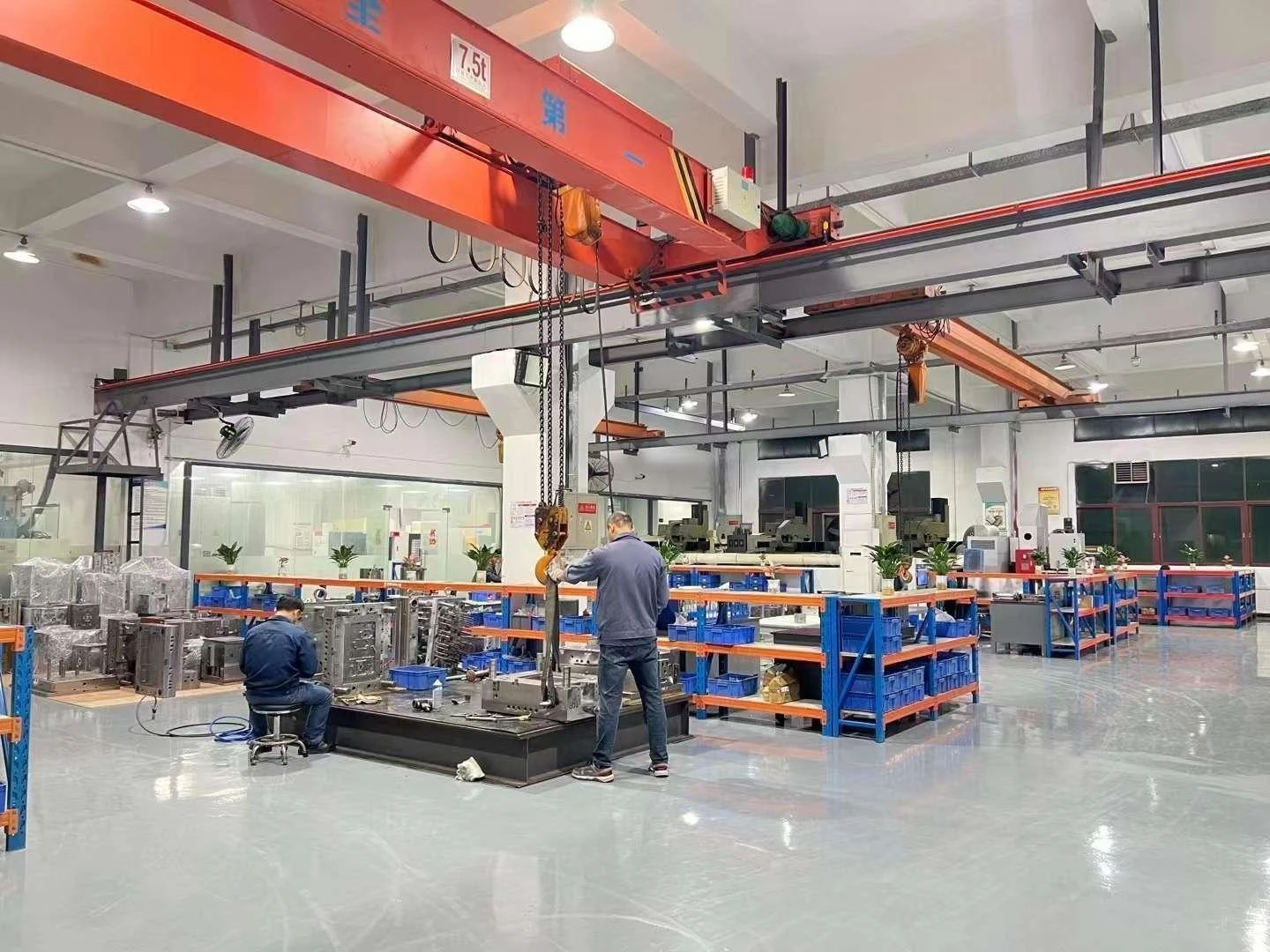
Modern moldmaking developed through several connected advances: materials, machine tools, molding equipment, interchangeable components, engineering software and production control. China’s tooling industry is best understood through that wider manufacturing system, not through a claim that one date or one factory created the entire sector.
A selective chronology, not a list of invented firsts
Mid-twentieth-century process development. ARBURG’s own history records a small injection-molding machine developed for its own use in 1954, series production from 1956 and a multi-component configuration in 1962. These are documented milestones for that manufacturer, not claims that injection molding or two-color tooling began everywhere on those dates.
Chinese machinery foundations. Haitian traces its roots to 1966. Its development illustrates the growth of a Chinese equipment supplier alongside the broader plastics-processing industry. A machine manufacturer’s history is relevant context, but it should not be confused with a complete history of Chinese mold design, machining or toolmaking businesses.
International trade integration. China joined the WTO on 11 December 2001. This is a clear milestone in the country’s international trading framework. For a tooling buyer, its relevance is the wider context of cross-border manufacturing relationships; it does not establish the quality, export readiness or capabilities of any individual mold supplier.
Connected manufacturing clusters. Dongguan’s official 2024 account of Chang’an identifies electronics and hardware/mold manufacturing as established industries alongside newer industrial directions. The town’s 2026 profile continues to describe a substantial machinery, hardware and mold cluster. This is evidence of a regional manufacturing ecosystem, not a guarantee that every business in the region has the same equipment or standards.
What changed in the toolmaking workflow?
A useful way to understand the evolution is to follow the information. A part requirement becomes a controlled model and drawing; manufacturability questions feed back into design; machining and EDM create functional surfaces; inspection relates the result to specified datums; fitting and trials test the complete tool. Production feedback then informs corrections and maintenance.
Standard component systems support this workflow by making selected interfaces and replacement items easier to specify. Modern DME product ranges, for example, cover bases, alignment, cooling, ejection and side actions. Standardization does not remove engineering work: the custom forming features and the integration of the whole tool remain project-specific.
Digital equipment also does not eliminate experienced toolmakers. Programming, inspection and process data are useful only when the team understands the part, material and functional requirement. A highly equipped workshop can still produce a poor result if the drawing, fit or acceptance criterion is misunderstood.
Why clusters matter—and what they do not prove
Our engineering interpretation is that a connected industrial environment can make it easier to coordinate specialized operations, replacement components, material supply and equipment service. However, proximity alone does not establish consistent quality. The customer still needs a clearly responsible technical team, controlled revisions, an inspection plan and traceable acceptance decisions.
For export tooling, the practical task is to translate the receiving factory’s requirements into a tool that can be operated and maintained there. This includes familiar replacement components, correctly defined cooling and electrical interfaces, adequate trials and usable handover records—not simply an English label on a wooden crate.
Where NewwaySmart fits
Our company history begins with precision tooling and machining, followed by broader material, packaging and prototype-to-production work. For this website, precision mold components remain the main entry point. The same project can continue through early engineering, complete mold manufacture, fitting, trials, molding and agreed assembly or automation.
We do not treat factory size as a substitute for attention to detail. A procurement review should examine representative components, drawing control, material and heat-treatment records, inspection methods and trial evidence. Those are more useful than a general claim about the strength of a country’s industry.
Explore precision mold components, ESI-to-production engineering and tool acceptance. The historical context helps explain the manufacturing environment; your project still deserves its own technical review.
Sources and interpretation
ARBURG manufacturer history; Haitian company history; WTO: China’s accession anniversary; Dongguan government: Chang’an industrial development, 2024; Chang’an official profile, March 2026. Chronological facts are distinguished above from our engineering interpretation. This is a selective overview, not a comprehensive national industrial history.