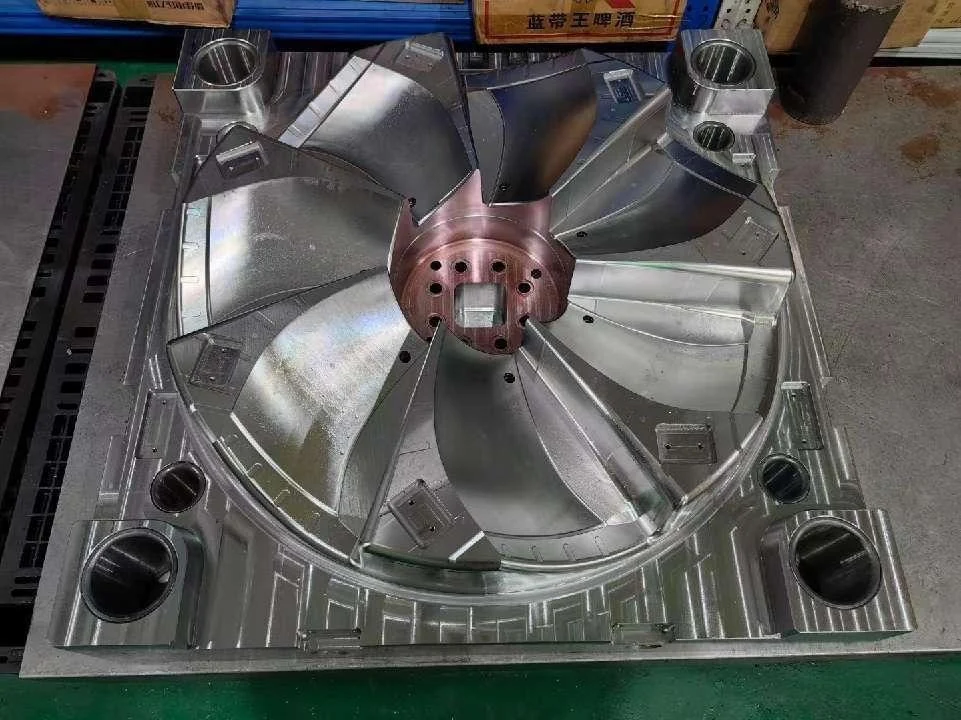
Replacing an insert can be a focused tooling project, but the replacement must preserve the approved geometry and fit inside a mold that already exists.
Distinguish repair from a design change
State whether the new insert restores the original condition or changes the molded part. Include the drawing revision and the tool identifier. A worn or damaged sample explains the problem, but its measured surface should not automatically be copied as the intended nominal geometry.
Include the parent-tool interfaces
The insert drawing should identify seating, locating, retaining and shut-off surfaces. Provide the mating pocket and relevant assembly drawing. Mark which dimensions are finished before shipment and which, if any, are fitted during assembly. Without that distinction, two suppliers may quote different finished conditions for the same part name.
Specify steel, hardness and surface condition
List the exact grade, heat-treatment stage, final hardness and finish requirements. Include any coating that affects the fitting dimensions or molding surface. Do not assume that a similar material name defines the same finished component.
Choose the evidence needed at delivery
Agree critical inspection dimensions, datums, surface acceptance and the required material or hardness records. Identify how the insert will be marked and packed. Component inspection verifies the agreed features; successful molding in the assembled tool is a separate validation step.
Explain the failure and the deadline
Describe wear, sticking, flash, damage or the dimensional issue and provide photographs or trial records. Clarify whether the deadline is dispatch, arrival at the plant or a planned mold trial after installation. This gives the supplier a useful basis for reviewing the machining and acceptance route.
NewwaySmart accepts independent mold-insert projects as well as cores, cavities and complete tool builds. An inquiry with the controlled drawing and mating information is more useful than an isolated request for ‘the tightest tolerance.’
Basis: NewwaySmart mold-core and insert service scope, project-change review and documented tooling validation workflow. This article is an inquiry and acceptance guide.